
A steady property market rarely makes the biggest headlines, and although there have been some declines in average values, the figures are influenced by the countries biggest market - Auckland. So for people looking to sell or buy a home, this broadly stable market can offer something valuable: choice, time to make decisions and room to negotiate.
The latest REINZ figures for September show a market moving at a measured pace. National prices have eased over the past year, but outside Auckland the median price is virtually unchanged. Regional differences remain significant, with several South Island markets recording growth.
For buyers with their finances in place and a longer-term view, these conditions present a worthwhile opportunity and for owners looking to sell it is also a good time to move and trade up.
Auckland influences the national picture
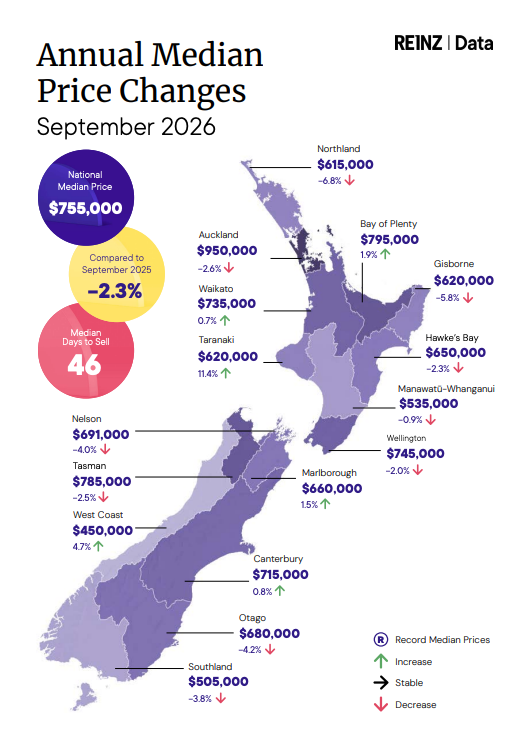
New Zealand’s median sale price was $755,000 in September, down 2.3% from a year earlier but up 0.7% from August. Outside Auckland, the median was $691,200, effectively unchanged year-on-year.
Auckland’s median fell 2.6% to $950,000. The last few years of increased supply means buyers there continue to benefit from substantial choice. The region had 37 weeks of inventory, six weeks more than a year earlier, with new listings increasing by 7.7%. That supply is helping keep negotiating power with buyers and putting pressure on prices.
The REINZ House Price Index, which adjusts for differences in the properties being sold, provides useful context. National values fell 1.5% annually, compared with 3.2% in Auckland and just 0.6% outside Auckland. This points to modest easing overall, rather than a uniform decline across the country.
Sales are taking time, but transactions continue
There were 5,752 residential sales nationally in September, down 11.6% year-on-year. Auckland accounted for just over half of the annual reduction in sales numbers.
The national median selling time was 46 days, three days longer than last September but six days shorter than in August. Available stock reached 34,001 properties, up 10.7% annually.
The usual spring lift has yet to fully emerge, potentially impacted by the upcoming election, but this is also a broader reflection of the continuing market conditions. Buyers have time to compare options, while sellers need realistic expectations about both price and timing.
Shaun Taylor, CEO of Professionals Group New Zealand says, "the latest market figures show that there are still more than 5,700 transactions taking place. We are seeing a lot of activity across the country, and smart buyers see that they can lock in some historically low mortgage rates and get real value in this market. First home buyers particularly see more opportunity to own their own home here in Aotearoa, than in Australia. The media likes negative headlines, but there are deals being made, the market doesn't listen to the media. Nearly 200 properties continue to be bought and sold every day. There has never been a time when working with an experienced salesperson has been more essential for providing advice and negotiating for vendors, and our guys are the best in the business."
Regional Highlights
The national averages mask some very different local stories:
- Southland: The strongest annual House Price Index growth, at 7.5%, leading the country for the 14th consecutive month. Invercargill achieved a record median of $542,500, although the wider region’s median fell 3.8% to $505,000.
- Canterbury: The median increased by 0.8% to $715,000, while its annual House Price Index rose 3.1%.
- Otago: Annual House Price Index growth of 2.8%, with Central Otago recording a new median high of $1.02 million.
- Taranaki: The largest annual regional median increase, up 11.4% to $620,000. However, its House Price Index fell 3%, showing why one month’s median should be read alongside broader measures.
- Bay of Plenty and Waikato: Medians increased by 1.9% to $795,000 and 0.7% to $735,000, respectively.
- Wellington: A more subdued market, with its third-lowest September sales count and an annual House Price Index decline of 4.5%.
- Manawatū-Whanganui: Sales increased by 8.2%, the strongest annual percentage increase among the regions.
Local knowledge matters. Conditions can differ considerably between neighbouring towns, suburbs and price brackets.
Four Reasons it's a Great Time to Buy
1. Today’s borrowing conditions and choice may not last
Interest rates remain supportive of economic activity, but buyers should not assume borrowing will become cheaper. The Reserve Bank lifted the Official Cash Rate (OCR) to 2.75% in September, and inflation remains above its target range. The practical point for buyers is that persistent inflationary pressure could mean higher mortgage rates over the coming year.
Combined with the choice available in many markets, today’s financing environment gives prepared buyers a reason to investigate their options. Get your lending approved, understand repayments at higher interest rates and assess the whole purchase rather than waiting for the perfect interest rate.
2. A broadly stable market rewards a long term approach
With the median sale price outside Auckland unchanged over the year and national value movements relatively modest, buyers can make considered decisions without the urgency of a rapidly rising market.
For someone purchasing a home to hold for several years, the priority is finding the right property at a price they can afford, with repayments they can comfortably manage. There is scope for values to grow over time as economic conditions improve, particularly outside of Auckland.
3. There are credible drivers of economic recovery
In his latest OneRoof commentary, economist Tony Alexander identifies several factors supporting growth. Five stand out: stronger farm incomes, supportive interest rates, recovering tourism, increasing international student numbers and infrastructure work. He also cautions that recovery does not necessarily mean a housing boom.
Shaun Taylor's view on how the economy will impact the housing market aligns with most economists. '''Agriculture and future infrastructure spend are particularly relevant to national confidence. Strong primary sector earnings support local businesses regionally, while infrastructure projects can generate work for contractors and suppliers as they progress in the bigger centres. These channels offer a basis for employment growth and greater confidence among households considering a move and perhaps a time where we see economic growth concurrently in the regions and the cities, which will positively impact the housing market.".
4. Negotiating power extends beyond price
One of the advantages of a buyer’s market is the opportunity to negotiate a deal that fits your circumstances. A vendor who holds firm on price may be more flexible about settlement timing, allowing you to sell your existing home, or complete agreed work before settlement. A longer settlement might help you coordinate your move, a shorter one might appeal to a seller who has already bought another property.
These are possibilities to explore, rather than concessions every vendor will accept. Understanding what matters to the seller can help both parties reach an agreement.
For buyers who are ready, the current market offers a useful combination: substantial choice, measured price movements and time to negotiate carefully.
You do not need to pick the exact bottom of the market to make a sound purchase. You need the right home, a realistic price and finances that work for you.
Speak with your local Professionals team about the latest sales in your area and how they impact the value of your current home.